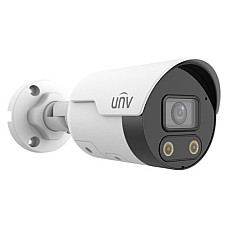
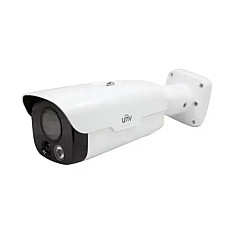
IP Camera Price in BD – A Straight Answer, Then the Real Buying Guide
IP camera price in BD depends heavily on resolution, lens type, and whether you go Wi-Fi or PoE – at Computer Village you'll find genuine models across that entire range, from simple home Wi-Fi units to professional network cameras, all backed by official warranty.
That's the honest answer. Now let's talk about what actually matters, because if you've spent any time comparing shops online, you've probably noticed something frustrating: every store quotes a different number, throws around specs like "2MP" and "PoE" without explaining them, and none of it tells you which camera you actually need for your house, your shop, or your office gate.
We've been fitting these systems for customers at our Agargaon showroom for years, and the same few questions come up every single week. "Will this work at night?" "Do I really need an NVR?" "Is Wi-Fi good enough, or should I get PoE?" This page is our attempt to answer all of that properly, in plain language, before pointing you toward the specific cameras that are actually flying off our shelves right now.
So What Is an IP Camera, Really?
Put simply, an IP camera is a security camera that talks over your network instead of running through a separate recorder box. It captures video, compresses it, and sends it straight to your phone, a cloud account, or a network video recorder – no analog conversion in between.
That might sound like a technical distinction, but it changes everything about how the camera behaves day to day. Older analog CCTV needs a DVR to make sense of the signal, and remote viewing on those systems always felt like an afterthought bolted on later. IP cameras were built for remote access from day one. Open an app, and you're watching your shop counter or your front gate in real time, wherever you happen to be.
For Bangladesh specifically, this matters more than people expect. Power cuts happen. Humidity plays havoc with cheap electronics. And a huge number of our customers – shop owners, landlords, small business managers – aren't physically at the location they want to monitor most of the day. An IP camera with cloud backup or a battery-supported NVR keeps working through a power blip and lets you check in from a rickshaw, an office desk, or another city entirely.
Don't Confuse These Three Things
Half the confusion we see in-store comes from people comparing quotes for genuinely different products without realizing it. An IP camera and a CC camera are not interchangeable terms, even though people use them that way casually.
| Term | What It Really Means | Best For |
|---|
| IP Camera / Network Camera | Fully digital camera that sends video over LAN or Wi-Fi to an NVR, mobile app, or cloud | Homes, shops, and offices that need remote viewing and higher resolution |
| CC Camera (Analog) | Traditional coaxial camera feeding into a DVR | Budget setups or buildings with existing coax wiring |
| DVR / NVR | The recording unit, not the camera – DVR for analog, NVR for IP | Any setup that needs long-term footage storage |
A CC camera, in the traditional sense, is an analog device running on coaxial cable into a DVR. It's older technology, generally cheaper, and works fine if you already have coax wiring in place from a previous install. An IP or network camera, on the other hand, is fully digital, runs over Ethernet or Wi-Fi, and pairs with an NVR rather than a DVR. If a quote you've received seems unusually low compared to everything else you've read, it's worth double-checking whether you're actually being quoted for an analog CC camera instead of a true IP camera – because the two aren't apples to apples.
How We Actually Help People Choose
Here's the order we walk customers through on the shop floor, because skipping steps is how people end up either overpaying for resolution they'll never use, or buying something that leaves them squinting at footage six months later wishing they'd gone one tier up.
Start With Resolution, and Be Honest About Your Space
A 2MP camera, which gives you standard Full HD footage, is genuinely enough for a small room, a shop counter, or a front door where whoever's in frame is close to the lens. Step up to 3MP or 4MP if you need to make out a face across a mid-sized hall, or read a number plate at your gate from a bit further back. Save 5MP and the 8MP, near-4K options for wide open areas – parking lots, warehouse floors, big compounds – where you'll be zooming into recorded footage after something's already happened. Keep in mind that higher resolution also eats more storage, so there's no point buying more megapixels than your actual scene calls for.
Then Think About the Body Style
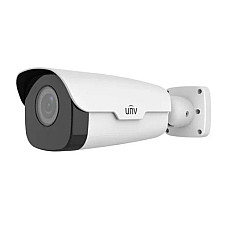
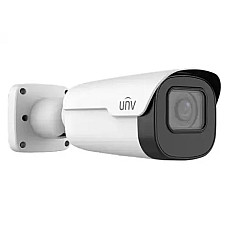
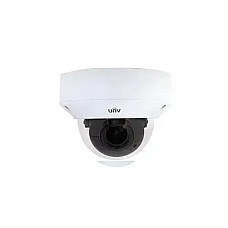
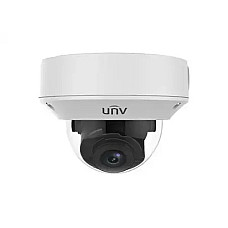
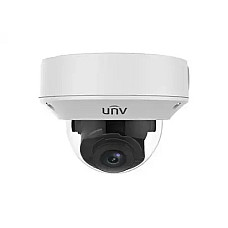
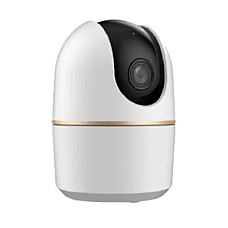
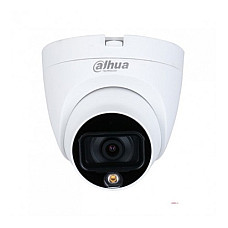
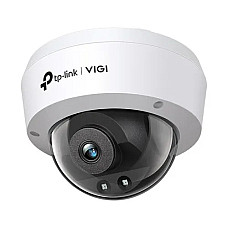
Dome cameras sit flush against a ceiling and don't obviously reveal which direction they're pointed, which makes them a natural fit for indoor shops, offices, and reception desks where you want coverage without it feeling intrusive. Bullet cameras are built for the outdoors – longer housing, weatherproof rating, usually a longer infrared range – and they're the standard pick for gates, driveways, and building perimeters. PTZ cameras physically rotate and zoom, so one unit can cover ground that would otherwise need two or three fixed cameras, which is exactly why they show up so often in showrooms and open compounds. And if you just want something simple for a bedroom or living room, the Wi-Fi pan-and-tilt cameras that connect through a phone app in a few minutes are hard to beat for convenience.
Wi-Fi or PoE Is the Next Real Decision
Wi-Fi makes sense for one or two cameras where running a cable would be a hassle – a rented flat, a small home, anywhere pulling wire isn't practical. PoE, or Power over Ethernet, is the more serious option: a single cable carries both power and data to the camera, which means a steadier feed and no scattered adapters at every camera point. Most multi-camera business setups run PoE into a shared network switch and an NVR, and honestly, once you're past two or three cameras, PoE just makes life easier.
Night Vision Isn't One Uniform Feature
Basic infrared gives you black-and-white footage after dark, which is fine but limited if you ever need to describe someone's clothing or a vehicle's color from playback. Newer sensor technology – branded differently depending on the manufacturer – keeps footage in full color even in near-total darkness, and if identification matters to you, that upgrade is worth the difference in cost.
Smart Features That Are Actually Worth Paying For
Two-way audio lets you speak through the camera itself, which is genuinely useful for warning off a delivery person or checking on a family member. Human and vehicle detection cuts down on the constant false alerts you get from generic motion sensing triggered by a stray cat or a moving curtain. And WDR – wide dynamic range – matters more than people expect if your camera faces a bright doorway or a window, since it stops the footage from washing out into a silhouette.
Matching the Camera to the Person Buying It
A homeowner keeping an eye on the front door or a child's room usually just needs one or two indoor Wi-Fi pan-and-tilt cameras with app access and a memory card slot. No NVR required, nothing complicated.
A shop or restaurant owner typically wants three or four cameras running around the clock – discreet domes watching the till and stockroom, one weatherproof bullet camera at the entrance, all wired into a shared NVR so nothing gets missed if one unit goes offline.
An office covering multiple floors and entry points needs something more robust: higher-resolution PoE cameras with smart detection, centrally recorded, ideally from an established brand with a track record for uptime and long-term support.
And if you're monitoring somewhere without a reliable internet connection – a construction site, a farmhouse, a plot still under development – a 4G-enabled camera that streams over a SIM card is worth looking at instead of forcing Wi-Fi where it doesn't belong.
Best-Selling IP Cameras In Stock Right Now
These are the models actually moving at Computer Village this month – genuine stock, tested, warranty included.
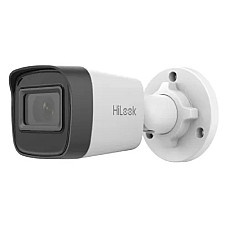
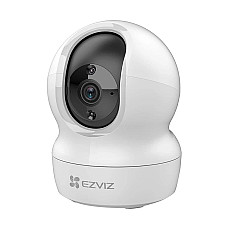
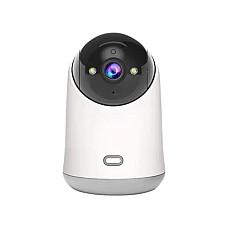
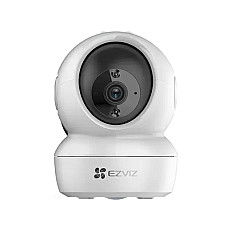
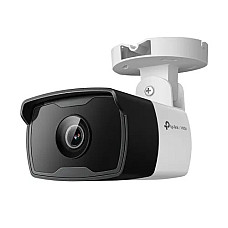
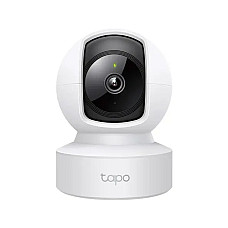
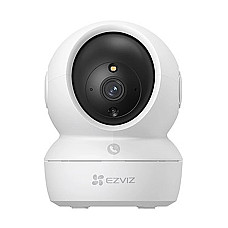
The Hikvision HiLook IPC-B121H-C 2MP Bullet IP Camera is our go-to recommendation for anyone who wants a trusted brand name at the entry level, weatherproof and PoE-ready for gates and entrances. For home users, the EZVIZ CP1 Lite 2MP Pan & Tilt Wi-Fi Dome Camera is consistently our best seller, thanks to full 360-degree coverage, two-way audio, and generous memory card support. First-time buyers who want the simplest possible setup usually walk out with the TP-Link Tapo C202 2MP Pan & Tilt Wi-Fi Camera, which pairs with its app in minutes and includes decent AI-based detection. For a business-grade outdoor option, the TP-Link VIGI C320I 2MP Bullet IP Camera delivers a 30-meter infrared range and PoE reliability without a steep price jump. And for sharp indoor coverage with genuinely useful two-way audio, the Dahua DH-IPC-H3AE 3MP Wi-Fi Pan & Tilt Camera punches well above what you'd expect.
A Camera Is Only Part of the System
One camera on its own doesn't protect much. Most setups we build also include an NVR to centrally store footage from every PoE camera, a network switch and proper UTP cable for wired runs, access control hardware for secured entry points, and a UPS so recording doesn't stop the moment the power does. If a traditional analog setup fits your situation better, our CC camera range is worth a look too. Bring us a rough sketch of your space and our team will work out exactly what you need – camera count, cabling, recorder – before you spend a single taka.
Why People Keep Coming Back to Computer Village
We've been part of Bangladesh's tech retail scene for more than 25 years, and security equipment isn't a side category for us – it's one of the areas our team knows inside out. Every unit we sell is officially sourced, never grey-market stock, with pricing that stays consistent instead of shifting depending on who's asking. Repairs and after-sales support run through our own in-house service center, not a third party we've outsourced the problem to. And if you're not sure what you need, our team will actually walk you through it, in person or over WhatsApp, rather than pushing whatever's overstocked. You can find cameras, NVRs, switches, and cabling all under one roof, and get the whole system specced out in a single visit to our Agargaon showroom.
Ready to secure your home, shop, or office? Explore the full range of genuine IP cameras and surveillance essentials at Computer Village – Bangladesh's trusted tech destination since 1998 – and let our team help you build a system that actually works for your space.
Frequently Asked Questions
What determines how an IP camera is priced in Bangladesh?
Resolution, lens type, night vision quality, and whether the camera runs on Wi-Fi or PoE are the main factors. Brand reputation and smart features like AI detection also play a role in where a model lands.
Is an IP camera actually better than an old-style CC camera?
For most modern needs, yes. IP cameras give you higher resolution, native remote viewing, and smart detection built in from the start. Analog CC cameras can still make sense for very simple, budget-conscious setups that reuse existing coaxial wiring.
Can an IP camera work without an internet connection?
Yes. A PoE camera records to a local NVR entirely within your own network. Internet only becomes necessary if you want to check the footage from outside that network. For sites without a fixed connection, 4G SIM-based cameras are the workaround.
Should I choose Wi-Fi or PoE?
Wi-Fi is simpler and fine for one or two cameras in a home. PoE is sturdier and scales better, which is why almost every business installation we do runs on it.
How many megapixels do I actually need?
For most homes, shops, and close-range doorways, 2MP is genuinely enough. Move up to 3MP or 4MP for identifying faces or plates at a distance, and 5MP to 8MP for wide areas like parking lots where you'll be zooming into footage later.
Where can I buy a genuine IP camera with real warranty backing in Bangladesh?
Computer Village is an authorised retailer with an in-house service center and over two decades of experience in the market. Every camera comes officially sourced, with warranty support that doesn't disappear after checkout.
Do I need an NVR for every IP camera setup?
Not necessarily. A standalone home Wi-Fi camera can record straight to a memory card or cloud account. Once you're running several PoE cameras in a business setting, though, an NVR becomes the practical choice for reliable, centralized storage.